SoilHeal
Carbon storage, soil health and nitrogen leaching in organic dairy crop rotations
SoilHeal
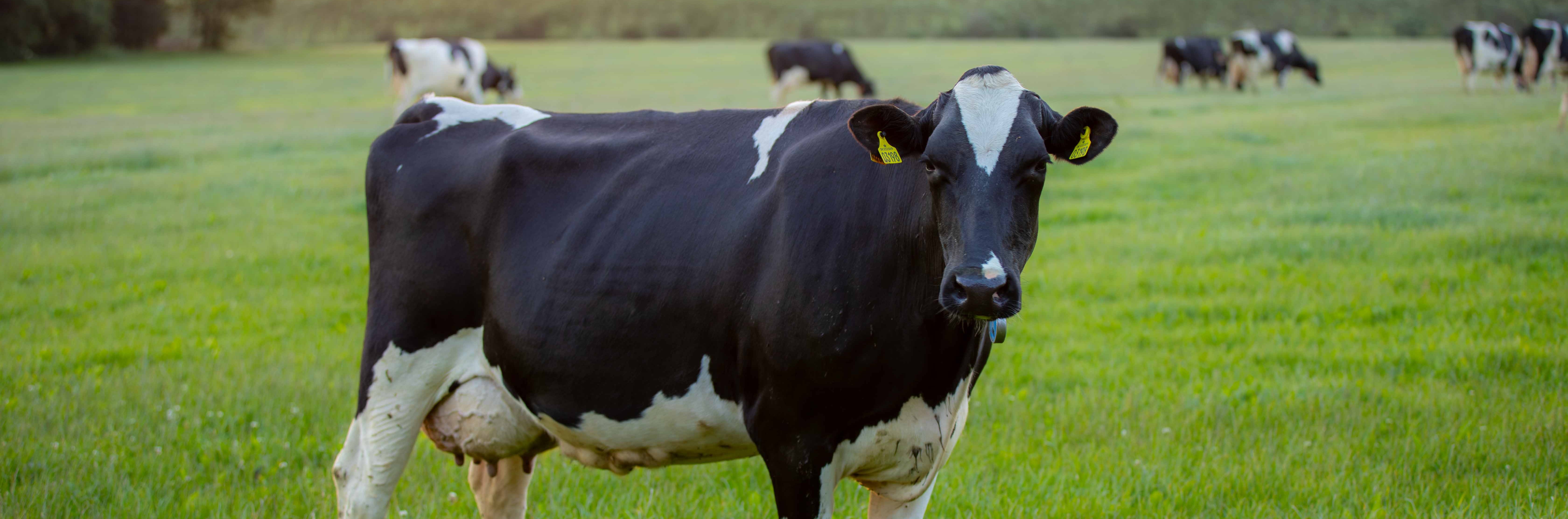
Agriculture plays a central role in the green transition of society. Particularly, organic dairy crop rotations, characterized by a high proportion of grass-clover in the rotation, grazing, and the use of animal manure, have great potential to increase soil carbon content. Increased carbon storage mitigates climate change while simultaneously promoting soil health and functionality. High nitrogen use efficiency and low N leaching losses are also central to the organic dairy crop rotation. However, quantification and identification of the beneficial climate and environmental effects are lacking, which is why existing climate models and the national greenhouse gas inventory do not distinguish between organic and conventional grass-clover ley, including grazing. Therefore, the climate footprint for organic dairy production is expected to be lower than assumed, which ultimately will result in an increased carbon tax.
The purpose of SoilHeal
SoilHeal will utilize the long-term organic dairy crop rotation experiment established in 1987 at AU-Viborg. This research platform provides a unique opportunity to quantify the effects of grassland proportion in the crop rotation and slurry application on carbon storage and soil health – effects that cannot be reliably assessed in short-term experiments, as these parameters change slowly. The focus will be on key indicators of soil health, including easily applicable analyses of soil structural stability and advanced X-ray Micro-Computed Tomography (CT) scanning of soil. Measurements of soil structure will improve our understanding of the development of a healthy soil and thereby resilience to extreme weather conditions caused by climate change. Additionally, we will quantify nitrogen use efficiency and N leaching within the cropping systems. The estimated carbon storage and N use in the organic dairy crop rotations will be implemented in existing climate models, resulting in more accurate calculations of the carbon footprint for organic dairy production. The project thus contributes to ensuring that organic dairy farming continues to play a key role in the green transition of the agricultural sector.
The project step by step
SoilHeal will:
- identify and quantify the effects of management regimes in organic dairy crop rotations that maximize soil carbon storage while improving soil health and minimizing nitrogen losses
- conduct a literature study on carbon input from organic grazed grass-clover ley
- use the new data as input in existing climate models for more accurate calculations of the carbon footprint for organic dairy production
- involve organic dairy farmers in the project aiming at calculating the carbon footprint for their farms and measure soil health indicators on their fields


Project leader

Johannes Lund Jensen
Tenure Track Assistant Professor
Department of Agroecology
Aarhus University
+45 22 19 34 21
jlj@agro.au.dk